 MEMBERSHIP LOGIN
 JOIN PRI
Safer at Speed: Designing Safer Race Cars
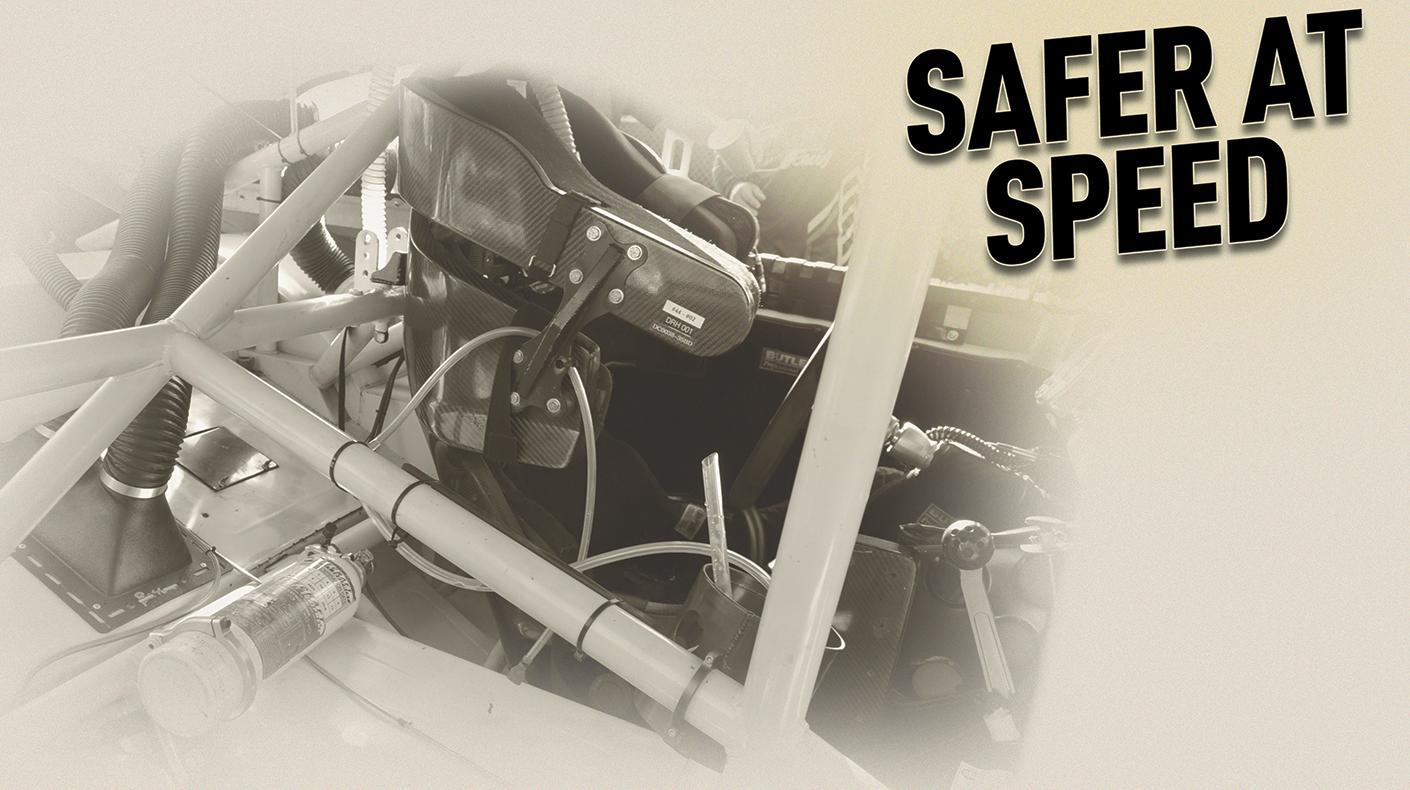
Safety is the one element of racing where nobody ever sits back, wipes their brow, and says, "Whew. All done. I'll never have to do that again." Driver safety is an ongoing puzzle that is never completely solved, although the sources we spoke with for this article have been filling in puzzle pieces for decades.
"You can't cut corners in safety. You just can't do it," said Mike Cope of Cope Race Cars, Clearwater, Florida. Cope Race Cars is an authorized chassis builder for the Trans Am series, with multiple championships to the company's name.
"We've been focused on safety since day one. I wouldn't put anyone in one of these cars that my son or grandson wouldn't drive," he said. "We pride ourselves on the fact that they're, I think, one of the safest cars on the market today. I've raced nearly this exact car over 40 years, and we've just kept adding little things, here and there, whenever we would see the problems come up."
Five Star Race Car Bodies in Twin Lakes, Wisconsin, had a modest beginning in the late 1970s, producing aftermarket body parts for the 1979 Camaro for local short-track racers. It is now a top supplier of complete bodies, components, and windows for NASCAR and other series. "When we design products, safety isn't just an afterthought that we layer on the product. We view safety as a system that we try to get all the parties involved in right from the start of a product idea that we have," said Garrett Schultz. "So right away, we're talking to the race teams to understand their pain points. We're talking to the series owners and tech officials to understand their pain points and really get a sense of what they're seeing in terms of safety incidents or product failures in the field. And then we take all that feedback and start designing our products. And then I think, most importantly, before we launch products, we get our designs in front of those stakeholders, get more feedback. So it's really an iterative process to get as much feedback as we can before we launch a product."
Innovation Situations
All race car builders have sanction rulebooks to follow and SFI standards to guide them. But designing safer race cars also takes homegrown initiative and innovation to advance the state of the art. That ingenuity takes many forms.
"One of the important things is making sure the material that you get is good material," said Murf McKinney of McKinney Corp., a builder of Top Fuel and Funny Cars in Lafayette, Indiana. "You have to qualify it, that it meets the spec it's supposed to be, because there's a lot of material out there that claims to be good, that is not. We take and check every tube that comes in here. We do a tensile pull test to verify that it's good material. Same thing with aluminum and the other materials that we get because there's a lot of unqualified material out there."
Once the materials pass inspection, the real engineering begins. "We use computer software to do what's called finite element analysis on the chassis," McKinney said. "And from that, we can put the input loads in, and it comes back and tells us how much stress is in every tube in the car. We can also induce harmonics into it and run it through different frequencies to see what it does."
Impact protection is always going to be the top goal for professional car builders. "One area we focus on heavily is object intrusion, debris penetrating body panels and reaching the driver," Schultz said. "Nearly every sprint car driver I've spoken with has a story about something coming through the car. That pushed us to look hard at the material science. We've incorporated aerospace-grade composite materials specifically to resist penetration and manage impact energy. Our new sprint car body is designed with this in mind, and we see it as a meaningful step forward in sprint car safety."
Designing a safer race car entails careful review of systems that go beyond the traditional focus by car builders. "We think that visibility is one of the most underrated safety systems in motorsports," Schultz said. "If a driver can't see well, that leads to a lot of issues on the race track. So we spent a lot of time, and we still do, optimizing the visibility through the glazing system, we call it. We really make sure that the distortion is low in these windshields so drivers can see clearly. We apply very sophisticated hard coating systems to these windows to prevent them from scratching and getting scuffed up over time.
To read the full article, plus hundreds of other articles like it, for free, sign up for a digital subscription to PRI Magazine on Zinio here.
Once you download the Zinio mobile app or are logged into Zinio on a desktop browser, you will gain immediate access to more than a year's worth of content, including this article here and additional coverage in the March/April 2026 issue here.